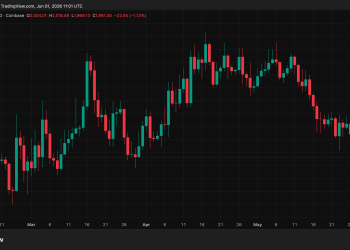
The live price of Lorenzo Protocol (BANK) is $0.22 USD and its current market capitalization is $-- USD.
Get real-time BANK/USD updates on HTX. Stay informed with the latest data and market trends to make smart trading decisions. HTX, your trusted source for accurate cryptocurrency price information.
Lorenzo Protocol Key Stats
24h Volume (USD)
$--
Price Change Today
+23.12%
Circulating Supply (BANK)
764.94M
Sign up and trade to win rewards worth up to 1,500 USDT.Join Now
BANK Price Performance
Track Lorenzo Protocol price movements with chart views spanning 1 day, 30 days, 60 days, 90 days, 1 year, and the period since it was listed on HTX.View more data for the Lorenzo Protocol prices
Time
Change
Change%
Highest Price
Lowest Price
No data
BANK Market Information
Get the latest Lorenzo Protocol price details on HTX: 24-hour high and low, all-time high (ATH), and daily price change percentage.
24h Low
$0
24h High
$0
All-Time High
$0
Market Cap
$0.00
24h Volume (USD)
$--
Circulating Supply
--
What is BANK?
Lorenzo Protocol is a modular Bitcoin Layer 2 infrastructure built on Babylon, designed to unlock BTC liquidity and integrate it into the DeFi ecosystem. The protocol enables users to earn yield by staking Bitcoin in exchange for yield-bearing tokens such as stBTC and enzoBTC. These tokens can be traded or used to generate additional yield on DeFi platforms. Lorenzo enhances Bitcoin's scalability, enables smart contracts, and provides Layer 2-as-a-service infrastructure by integrating Babylon's staking and timestamping protocols along with Chainlink services. The protocol aims to offer BTC holders an efficient and secure framework for staking and yield management.
It's super easy to buy BANK on HTX. Simply click here to view a complete guide to buying Lorenzo Protocol with ease.
Real-Time BANK Markets
View real-time Lorenzo Protocol prices on HTX's spot markets. Switch between spot and futures markets to instantly compare live prices and 24-hour price changes.
Based on the historical performance of Lorenzo Protocol, our prediction tool estimates that the price of Lorenzo Protocol (BANK) could reach -- by --.
Predicted BANK Price in --
Our most recent forecast indicates the price of Lorenzo Protocol (BANK) will increase to -- by --, with a price change of --% and a cumulative ROI of approximately --%.
Buy your first BANK on HTXSign Up
BANK FAQs
QWhat is the Lorenzo Protocol (BANK) price today?
AThe current price of Lorenzo Protocol (BANK) is $0.22 USD.
QWhat is the Lorenzo Protocol (BANK) market cap?
AThe current market capitalization of Lorenzo Protocol (BANK) is $0.00 USD, calculated by multiplying its circulating supply by its current price.
QWhat is the Lorenzo Protocol (BANK) circulating supply?
AThe current circulating supply of Lorenzo Protocol (BANK) is -- BANK.
QWhat is the Lorenzo Protocol (BANK) all-time high?
AAs of 2026-07-22, the all-time high of Lorenzo Protocol (BANK) is $0 USD.
QWhat is the Lorenzo Protocol (BANK) 24h trading volume?
AThe 24-hour trading volume of Lorenzo Protocol (BANK) is -- USD on HTX.
QCan I buy Lorenzo Protocol (BANK) on HTX?
AYes, HTX offers industry-leading trading fees and deep liquidity, ensuring a smooth and secure Lorenzo Protocol (BANK) purchase experience.
The U.S. Treasury, via OFAC, has sanctioned TRON wallet addresses linked to Iran, resulting in the freezing of approximately $131 million worth of the USDT stablecoin. This action highlights a core tension in crypto: while transactions occur on public, permissionless blockchains, major dollar-backed stablecoins like USDT are issued by centralized companies that can freeze assets to comply with sanctions and law enforcement. The case underscores that stablecoins are not as censorship-resistant as other cryptocurrencies, as their issuers must maintain banking relationships and regulatory standing. TRON's low fees and wide adoption have made it a major network for USDT transfers, which also draws significant compliance scrutiny. This enforcement signals that stablecoin infrastructure, despite its on-chain nature, remains within reach of government oversight, emphasizing the trade-off between utility and control in the growing digital asset ecosystem.
In its latest emerging markets strategy report, Citi has upgraded China to overweight from neutral, while downgrading South Korea to neutral from overweight. It maintains an overweight rating for China-Taiwan markets. The report sets MSCI EM index targets of 1870 by end-2026 and 2050 by mid-2027, implying further upside of approximately 12% and over 20% respectively from current levels.
Citi's move reflects a search for "broadening" opportunities beyond the concentrated rally in AI hardware and tech, which has driven EM gains year-to-date, led by South Korea and China-Taiwan markets. The upgrade for China is based on factors including light investor positioning, potential benefits from lower oil prices, and relative attractiveness in a recovering global growth cycle. While maintaining a strong long-term view on South Korea, Citi notes its recent outperformance and elevated volatility prompted a tactical downgrade.
The report highlights that EM earnings revisions remain narrow, with the IT sector contributing about 85% of 2026 EPS estimate upgrades. For a sustained rally, Citi argues that market gains need to broaden to other sectors and regions. China, South Africa, and Mexico rank highly as potential "broadening candidates" based on factors like sensitivity to a weaker dollar, lower bond yields, and oil prices.
Key uncertainties include the sustainability of AI capital expenditure returns, geopolitical risks, and Federal Reserve policy. Citi's stance is cautiously optimistic, suggesting the rally has room to broaden rather than signaling a confirmed broad-based EM bull market. The path to higher index targets depends on whether non-tech earnings revisions improve and if capital rotates from concentrated winners into a wider set of markets.
Bank of America has quietly made leadership appointments to accelerate its digital asset strategy, sparking discussion about a potential large-scale migration of bank deposits to stablecoins. Reports highlighted the bank naming Sonali Theisen, Kevin Milsom, and Adam Dixon to lead its global digital asset and AI platform, focusing on stablecoins, tokenized deposits, custody, and crypto settlement.
This move revived a claim that $6 trillion in bank deposits could flow into stablecoins, a figure originally cited by Bank of America's CEO Brian Moynihan in January. However, he conditioned this shift on stablecoins being allowed to pay interest—a feature not permitted under the current GENIUS Act. The legislation's final rules are delayed, pushing its effective date to January 2027.
Major banks are not waiting. JPMorgan and Citigroup are already piloting tokenized deposit services, and a consortium including Bank of America is building a shared tokenized deposit network targeting a 2027 launch. While some, like Pacemakers.io's Alessandro Hatami, remain skeptical of rapid bank collaboration, data shows significant institutional adoption. Stablecoin settlement volume hit $33 trillion in 2025, and analysts project the market could surpass $1 trillion by 2026.
Despite a recent dip in crypto prices and stablecoin supply, the institutional push for real-world use cases continues. The race is on for January 2027, when the GENIUS Act takes effect, potentially reshaping the competition between traditional finance and digital assets.
Chainlink's Cross-Chain Interoperability Protocol (CCIP) is being tested in several central bank digital asset pilots, including Brazil's Drex initiative, Hong Kong's Ensemble network, and the HKMA's e-HKD+ program involving ANZ Bank. These institutional trials, though not yet full commercial deployments, are significant for testing interoperability, secure cross-chain messaging, and settlement in regulated environments. The pilots demonstrate a growing institutional focus on how different tokenized systems can communicate for cross-border trade and payments. For Chainlink, participation enhances its credibility in the institutional market, positioning CCIP as potential infrastructure for a future of interconnected digital asset networks. The article emphasizes that while these are early-stage experiments, they represent a key step in the adoption process for blockchain technology in traditional finance.
Bank of America (BofA) is making strategic moves in digital assets, appointing senior leaders to advance a platform covering stablecoins, tokenized deposits, custody, and crypto settlement. This comes amid a broader discussion about the potential migration of trillions in bank deposits to stablecoins. A cited TBAC report estimated up to $6.6 trillion in transactional deposits could be at risk of moving to stablecoins long-term, a point BofA's CEO previously conditioned on stablecoins being allowed to pay interest.
The regulatory landscape is evolving, with the GENIUS Act setting a final implementation deadline for January 2027. Major banks, however, are not waiting; JPMorgan, Citi, BofA, and others are already developing tokenized deposit networks and services. Industry observers note that while retail crypto trading is sluggish, institutional adoption of stablecoins for real-world use cases is driving growth.
Despite the activity, some analysts remain cautious, noting banks have a long history of blockchain announcements and that true structural change is slow. The stablecoin market itself has seen a recent dip from its peak. Optimistic projections, however, foresee significant growth, with stablecoin settlement volume already reaching $33 trillion in 2025. The race is on for the post-January 2027 landscape, where regulatory clarity is expected to accelerate the fusion of traditional finance and crypto.
marsbit21小时前
Threads
Welcome to the HTX Community. Here, you can stay informed about the latest platform developments and gain access to professional market insights. Users' opinions on the price of Lorenzo Protocol (BANK) are presented below.
Related Questions
Welcome to the Crypto FAQ. Users' questions and answers on Lorenzo Protocol (BANK) are presented below.