Point your camera at QR code

to get HTX App

More options
Language
Currency
Log out
Language
Currency
m

MemeCore Price(M)

$2.87+0.98%

Live M Chart (M/USD)

Last Updated:

  • 1H
  • 24H
  • 1W
  • 1M
  • 1Y
  • All
No data
M to USD Calculator
Pay
Get
m
M
arrow

Rate1 M = 2.87 USD

Updated ()

Real-Time M Stats

The live price of MemeCore (M) is $2.87 USD and its current market capitalization is $-- USD.

Get real-time M/USD updates on HTX. Stay informed with the latest data and market trends to make smart trading decisions. HTX, your trusted source for accurate cryptocurrency price information.

MemeCore Key Stats

  • 24h Volume (USD)

    $--

  • Price Change Today

    +0.98%

  • Circulating Supply (M)

    1.31B

2026, See You in North America
Where the world unites for a new on-chain journey.

M Price Performance

Track MemeCore price movements with chart views spanning 1 day, 30 days, 60 days, 90 days, 1 year, and the period since it was listed on HTX.View more data for the MemeCore prices

TimeChangeChange%Highest PriceLowest Price
Simple Empty
No data

M Market Information

Get the latest MemeCore price details on HTX: 24-hour high and low, all-time high (ATH), and daily price change percentage.

  • 24h Low

    $0

  • 24h High

    $0

  • All-Time High

    $0

  • Market Cap

    $0.00

  • 24h Volume (USD)

    $--

  • Circulating Supply

    --

What is M?

MemeCore is the first Layer 1 blockchain, built for Meme 2.0 — a new paradigm where meme coins transcend speculation to become engines of culture, value, and community coordination. In this new era, memes are not just content — they are currency, governance, and creative expression.

For details, please read: What is MemeCore?

How to Buy M

It's super easy to buy M on HTX. Simply click here to view a complete guide to buying MemeCore with ease.

Real-Time M Markets

View real-time MemeCore prices on HTX's spot markets. Switch between spot and futures markets to instantly compare live prices and 24-hour price changes.

Trading

Spot
Futures
Key Stats
Current Price
--
Ranking
23
Initial Release
--
Total Supply
--
Circulating Supply
--
Fully Diluted Market Cap
--
Market Cap
--
Useful M Links
Official Website
Block Explorer
Twitter

M Price Prediction

Explore the complete M price predictions on HTX.

Predicted M Price in --

Based on the historical performance of MemeCore, our prediction tool estimates that the price of MemeCore (M) could reach -- by --.

Predicted M Price in --

Our most recent forecast indicates the price of MemeCore (M) will increase to -- by --, with a price change of --% and a cumulative ROI of approximately --%.

Buy your first M on HTXSign Up

M FAQs

QWhat is the MemeCore (M) price today?

AThe current price of MemeCore (M) is $2.87 USD.

QWhat is the MemeCore (M) market cap?

AThe current market capitalization of MemeCore (M) is $0.00 USD, calculated by multiplying its circulating supply by its current price.

QWhat is the MemeCore (M) circulating supply?

AThe current circulating supply of MemeCore (M) is -- M.

QWhat is the MemeCore (M) all-time high?

AAs of 2026-06-21, the all-time high of MemeCore (M) is $0 USD.

QWhat is the MemeCore (M) 24h trading volume?

AThe 24-hour trading volume of MemeCore (M) is -- USD on HTX.

QCan I buy MemeCore (M) on HTX?

AYes, HTX offers industry-leading trading fees and deep liquidity, ensuring a smooth and secure MemeCore (M) purchase experience.

M News

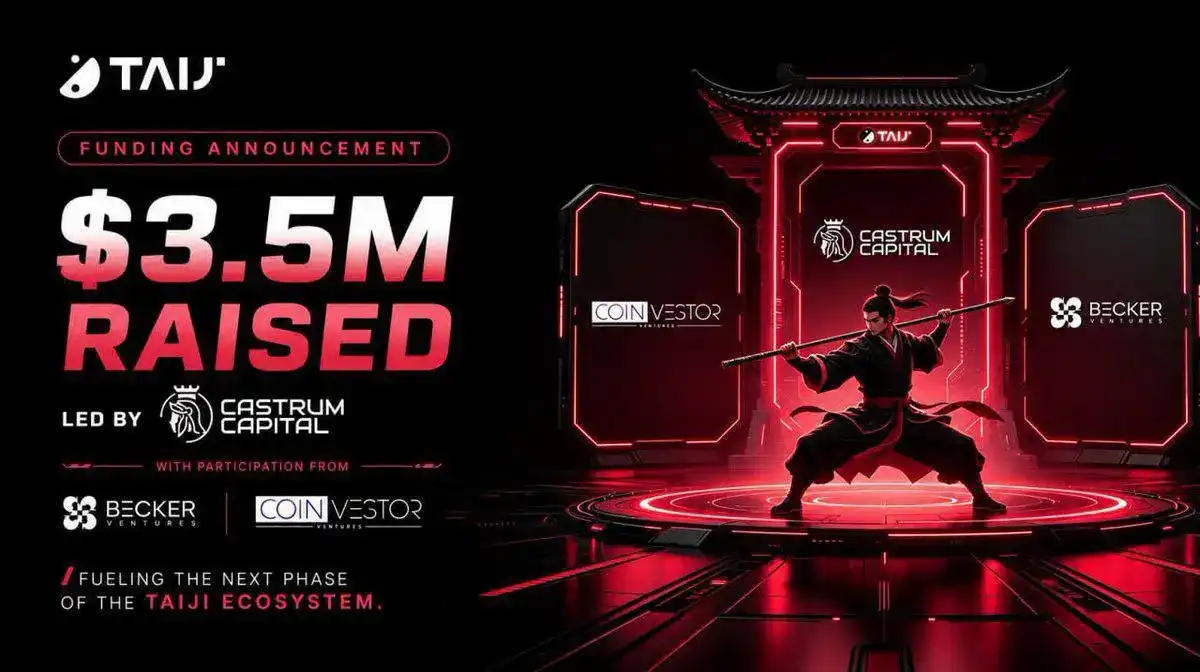
TaiJi Completes $3.5 Million Strategic Financing with Participation from Castrum Capital, Becker Ventures, and Coinvestor Ventures

TaiJi, an AI-driven market intelligence platform for Web3, has completed a $3.5 million strategic funding round. The investment was led by Castrum Capital, Becker Ventures, and Coinvestor Ventures. The funds will be allocated to product R&D, upgrading its AI inference engine, building a multi-agent analysis system, improving market data infrastructure, expanding its global community, and advancing ecosystem partnerships, particularly within the BSC ecosystem. TaiJi aims to transform how users understand the Web3 market by moving beyond simple data display. It integrates market data, on-chain signals, liquidity changes, social sentiment, and news events into a unified AI system. This system generates structured event inferences, impact pathways, risk assessments, and follow-up indicators. The platform's core approach involves a multi-agent framework where specialized agents (Market, On-chain, Sentiment, Risk, Event) collaboratively analyze disparate signals to produce coherent market intelligence. Its initial product will feature modules including Market Intelligence, a Scenario Engine for AI-powered event analysis, an Impact Map, Risk Signals, and a personalized user dashboard called "My TaiJi." TaiJi emphasizes that it does not custody user assets, execute trades, provide investment advice, or promise returns. Following this funding round, the company plans to accelerate product development and testing, gradually rolling out its core features to the broader Web3 market.

TaiJi Completes $3.5 Million Strategic Financing with Participation from Castrum Capital, Becker Ventures, and Coinvestor Ventures - marsbit

Beosin: 36 Major Security Incidents in May Resulting in Over $76 Million in Losses

In May 2026, the Web3 ecosystem suffered over $76.15 million in losses across 36 major security incidents, according to Beosin Alert. The primary causes were contract vulnerabilities and private key leaks. The top loss involved the Verus-Ethereum Bridge, which lost $11.58 million due to a cross-chain message validation flaw—a vulnerability type historically responsible for massive losses at Wormhole and Nomad. The Echo Protocol attack, resulting from a private key leak, saw the minting of 1,000 eBTC (nominal value ~$76.7M), with the attacker netting ~$5.13 million due to liquidity constraints. Cross-chain bridges were the hardest-hit category, accounting for $27.995 million in losses. DeFi protocols were the most frequently targeted, with 14 attacks. Ethereum saw the highest chain-specific losses at over $48.76 million, followed by BNB Chain, Monad, and TON, indicating a multi-chain attack landscape. A detailed analysis highlighted three key incidents: 1. **Verus-Ethereum Bridge**: A flaw where the bridge contract verified proof from the Verus chain but failed to validate the underlying asset value, allowing fake outputs. 2. **Trusted Volumes**: A signature parameter defect in its RFQ system allowed an attacker to manipulate authorization checks and drain assets from the Resolver contract. 3. **Private Key Leaks (e.g., StablR)**: Operational failures, including inadequate multi-signature wallet thresholds and lack of timelocks, led to losses exceeding $25 million across multiple projects. The report concludes that the Web3 security threat landscape is expanding systemically. Risks now span code, infrastructure, interoperability, and human processes, moving beyond code audits alone. Projects are urged to enhance operational security, review old contracts, and users should regularly revoke unnecessary approvals.

Beosin: 36 Major Security Incidents in May Resulting in Over $76 Million in Losses - marsbit

M&A Deals Are Exceptionally Active in the Crypto Market

Mergers and acquisitions (M&A) activity in the cryptocurrency primary market has reached a historic high, accounting for approximately 42% of total deals in the current month, nearly matching the number of financing rounds. This shift does not signal a new boom cycle but rather reflects a severe contraction in the venture capital funding environment. As financing dwindles, established industry giants—including major exchanges, payment firms, and infrastructure providers—are seizing the opportunity to acquire strategic assets at lower valuations. Key drivers behind the surge in M&A include depressed project valuations, the need to quickly acquire talent and technology to capture short market windows, the pursuit of crucial regulatory licenses, and the strategic expansion into adjacent business verticals such as derivatives, payments, stablecoins, and real-world asset (RWA) issuance. Major acquisitions, like Coinbase's purchase of Deribit and Kraken's acquisition of NinjaTrader, exemplify the push to expand into high-margin areas like derivatives and multi-asset trading. This trend is reshaping the industry's exit landscape, offering an alternative to token-based exits and incentivizing startups to build tangible products and revenue streams with inherent strategic value for acquisition. However, it also points toward increasing centralization, as critical functions—trading, custody, payments, compliance—become concentrated within a few large, well-capitalized platforms, potentially raising barriers to entry for new ventures.

M&A Deals Are Exceptionally Active in the Crypto Market - marsbit

M&A Deals in the Crypto Market Are Unusually Active

Title: M&A Activity in Crypto Market Becomes Unusually Active A rare signal is emerging in the crypto primary market: mergers and acquisitions (M&A) are nearing half of all financing deals. According to RootData, this month, M&A cases in the crypto industry reached 10, while financing rounds numbered only 14, meaning M&A accounts for approximately 42% of primary market transactions—the highest level in history. This does not signal a sudden industry boom. Instead, the rapid rise in M&A share primarily reflects the continued downturn in the financing market. Since November 2024, monthly crypto M&A deals have remained between 10-20, while financing deals have plummeted from around 100 to about 50, possibly hitting a new low this month. For project teams, this means the traditional path of relying on narratives, token expectations, and ecosystem subsidies to maintain valuations is narrowing. For leading companies, it presents a rare window to acquire teams, licenses, technology, liquidity, and market access at lower prices, with less competition and stronger bargaining power. Key active buyers include Coinbase, Kraken, Ripple, MoonPay, Polymarket, Kaiko, Sol Strategies, GSR, Keyrock, Jupiter, Paxos, and Ondo Finance. Their M&A logic is consistent: acquiring key capabilities at lower costs during the industry downturn. This is driven by more attractive valuations, reduced time and trial-and-error costs, the acquisition of licenses and compliance resources, and the integration of industry upstream and downstream segments. Current M&A focuses are concentrated in four areas: trading infrastructure (e.g., Coinbase acquiring Deribit, Kraken acquiring NinjaTrader), payments and stablecoins (e.g., MoonPay, Ripple expanding payment networks), compliance licenses, and asset issuance/distribution (e.g., acquisitions related to RWA and token issuance platforms like Coinbase's purchases of Liquifi and Echo). The rise in M&A is altering the primary market's exit logic. It provides an alternative path to the token-dependent model, encouraging teams to build tangible products, revenue, and strategic value that can be integrated. This could inject confidence into the market, showing that asset buyers and exit possibilities still exist, albeit with a stricter focus on real utility. However, this trend also indicates the crypto industry is becoming more centralized. As asset issuance, trading, market-making, custody, payments, and data gradually consolidate in the hands of a few major players, the industry's initial emphasis on openness and anti-monopoly is being reshaped by commercial realities. Coupled with rising compliance barriers, this signals the end of the low-barrier era for crypto entrepreneurship.

M&A Deals in the Crypto Market Are Unusually Active - 链捕手

ChatGPT Loses Half Its Market: From Monopoly to Shared Market in Three and a Half Years

In a landmark shift three and a half years after its debut, ChatGPT's global market share in the AI assistant market has fallen below 50% for the first time, dropping to 46.4% as of May 2026. This signals the end of its initial dominance, with the market now diversifying among competitors like Gemini (27.7%) and Claude (10.3%). The report from Sensor Tower indicates the AI assistant landscape has matured from a phase of awe and experimentation into one of product comparison, ecosystem integration, and monetization. Users are increasingly pragmatic, readily switching between assistants based on specific use cases, brand trust, and value propositions. The industry is moving past the "free lunch" era, with users demonstrating a willingness to pay for premium features, driving significant in-app expenditure. Major players are adopting varied monetization strategies: Claude boasts a high subscription conversion rate, while ChatGPT is increasingly testing ads and shopping integrations to complement its subscription revenue. However, this growth comes with immense costs, as exemplified by OpenAI's soaring cash burn for model training and infrastructure. While ChatGPT remains the largest single player, its declining share symbolizes a broader normalization of AI. The technology is no longer a novelty but an integral, scrutinized part of daily digital life, judged on practical utility, price, and seamless integration. The battle has shifted from proving AI's potential to competing in a crowded field where no single product holds a permanent monopoly.

ChatGPT Loses Half Its Market: From Monopoly to Shared Market in Three and a Half Years - marsbit

Threads

Welcome to the HTX Community. Here, you can stay informed about the latest platform developments and gain access to professional market insights. Users' opinions on the price of MemeCore (M) are presented below.

Related Questions

Welcome to the Crypto FAQ. Users' questions and answers on MemeCore (M) are presented below.

Hot Articles

Language