Point your camera at QR code

to get HTX App

More options
Language
Currency
Log out
Language
Currency
core

CORE(CORE) Regular Invest

CORE PnL History

Get the latest CORE price details on HTX: 24-hour high and low, all-time high (ATH), and daily price change percentage.

Total PnL/PnL%

-$268,05-44,68%

Single Investment Amount
$100
Investment Interval
Monthly
Lowest Buy Price
$0,02914
Highest Buy Price
$0,11347
Total Investment Amount
$600
CORE Quantity
12.599,014801877722
Average Price
$0,04762277
Total Value
$331,95

Regular Invest PnL Trend

Use Regular Invest for BTC to achieve up to -44,68% returns. Long-term consistency yields significant results.

Price
PnL%
Price
PnL%

CORE PnL Calculator

USD
Week
6 months
Investment Amount
--
CORE Quantity
--
Total PnL
--

-

* The result is based on the crypto's historical price data and reflects past market performance only. It does not represent actual historical returns and is for reference purposes only.

CORE PnL Prediction

USD
Week
6 months
Investment Amount
--
CORE Quantity
--
Total PnL
--

Track real-time CORE price trends on HTX, with support for all-period historical data queries.View more data for the CORE prices

Explore the complete CORE price predictions on HTX.

-

* The result is estimated based on the crypto's projected future prices. It is an expected return rather than the actual historical data, and is for reference purposes only.

Articles

Market Adjusts Following Google's $84.7 Billion Fundraising, AI Valuations Now Focus on Payback Speed

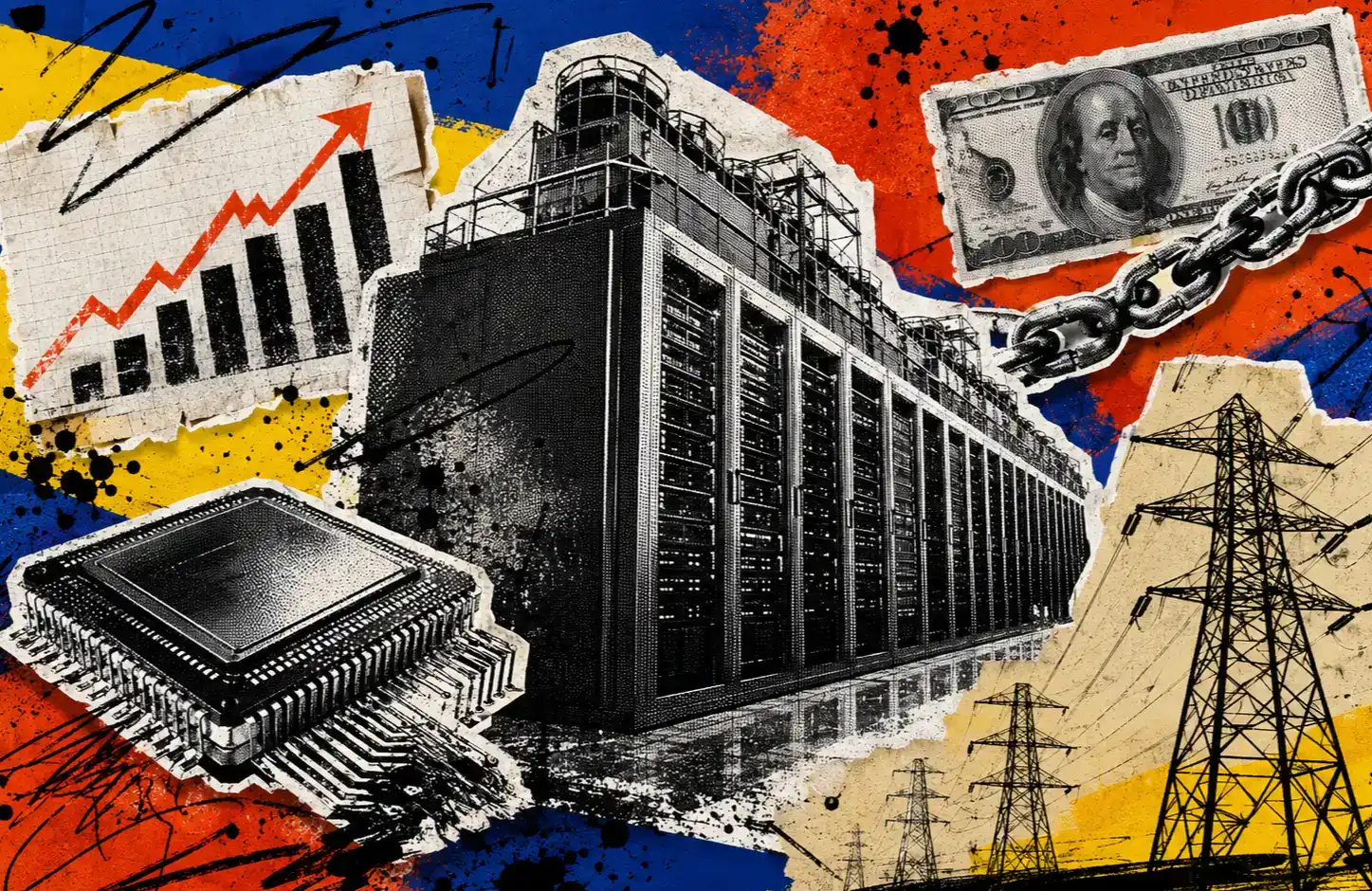
After Alphabet's announcement of an $84.75 billion equity financing round, market focus for AI investment is shifting from pure growth narratives to capital efficiency and payback periods. The core argument is that AI is being re-priced from a software-like growth story into a heavy-asset infrastructure cycle, requiring massive capital expenditure (CapEx) on chips, data centers, and power grids. While Alphabet's financing itself is not a distress signal—part of it is for administrative purposes like tax obligations on stock compensation—it highlights the enormous capital demands of AI infrastructure. This demand extends beyond tech giants to pure-play AI model companies (like OpenAI, Anthropic), data center REITs, and utilities. Major tech firms are projected to spend heavily on AI data centers in 2026, signaling a broad-based capital cycle the market must absorb. Consequently, valuation logic is changing. Investors are moving away from questions about who has the strongest AI narrative and are now prioritizing clear visibility into orders, stable cash flows, and the cost of capital. This has led to recent pressure on high-multiple AI software and semiconductor stocks, while "picks-and-shovels" hardware, data center, and power assets with firmer near-term demand may see relative support. The key going forward will be monitoring whether rising CapEx guidance across companies is matched by a timely monetization of AI investments into revenue and cash flow. The market's tolerance for high spending depends on demonstrable returns. While the long-term AI thesis remains intact, the valuation framework has fundamentally shifted to emphasize capital discipline and payback speed.

Market Adjusts Following Google's $84.7 Billion Fundraising, AI Valuations Now Focus on Payback Speed - marsbit

SEC Proposes Repealing 20-Year Core Rule: The Biggest Barrier to Tokenized US Stocks Is Disappearing

The U.S. Securities and Exchange Commission (SEC) has voted to propose repealing Rule 611 of Regulation NMS, the "order protection rule" that has been a cornerstone of U.S. equity market structure since 2005. This move, while a story of traditional finance, represents a major potential policy shift for tokenized U.S. stocks, removing a key structural barrier. Rule 611 mandates that trading centers cannot execute trades at prices inferior to protected quotes displayed on other exchanges. This framework is fundamentally incompatible with Automated Market Makers (AMMs) used in decentralized finance (DeFi). AMMs execute trades along bonding curves with price slippage and cannot comply with the rule's real-time, price-by-price requirements, meaning any tokenized stock liquidity pool would be in violation. The proposed repeal would replace the prescriptive rule with a principles-based "best execution" obligation on broker-dealers. This allows brokers to route orders to on-chain liquidity pools like AMMs, fulfilling their duty through periodic review rather than per-trade enforcement. The proposal is backed by significant historical context. SEC Chair Atkins, who voted against Reg NMS in 2005 alongside Commissioner Glassman, is now acting on his decades-old dissent. They argued Rule 611 would distort markets and push liquidity into dark pools rather than improve transparency—a prediction validated by current SEC data showing nearly half of trading now occurs off-exchange. The SEC's proposal explicitly connects to the crypto industry, citing academic work that Rule 611 has prevented innovation like AMMs and atomic settlement in stock markets. The process has been deliberate, following public roundtables and comments. While tokenized securities face other regulatory hurdles, this repeal is seen as a critical first step in clearing the path for next-generation market structure innovation.

SEC Proposes Repealing 20-Year Core Rule: The Biggest Barrier to Tokenized US Stocks Is Disappearing - marsbit

Supply Chain, Energy, and Bloc Formation: Untangling the Core Threads of 2026 AI Investment

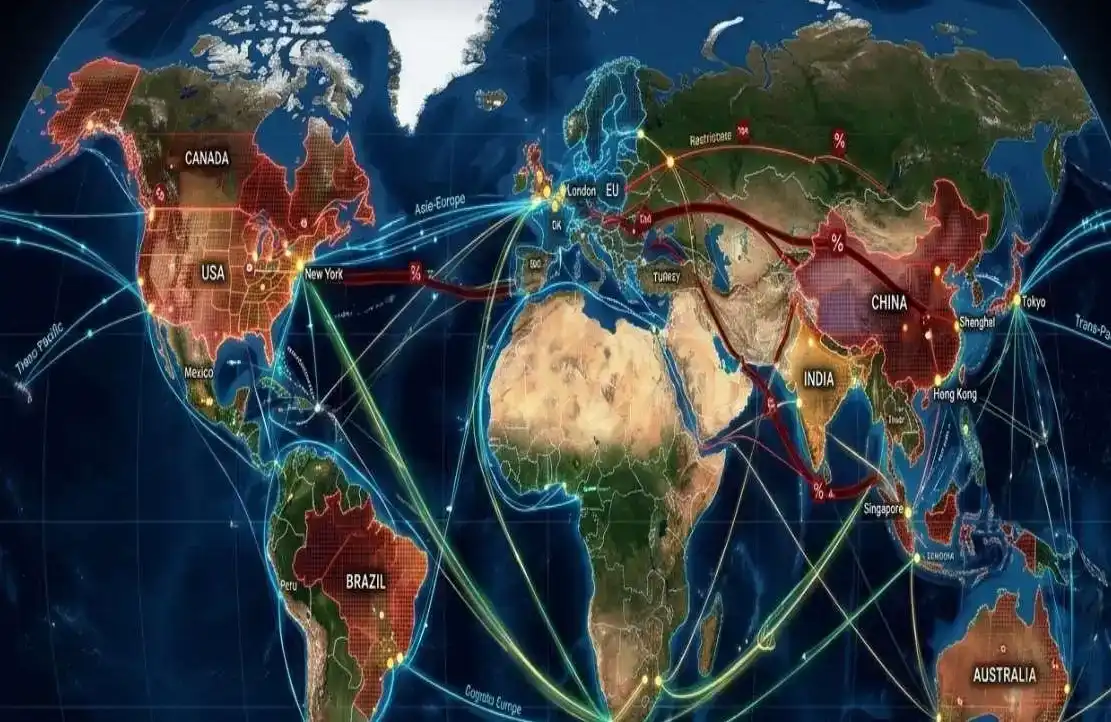
The core thesis for 2026 investment is a shift from traditional growth-inflation analysis towards a geopolitical framework of strategic blocs, supply chain reconfiguration, and capital expenditure (capex) direction. The US is moving from a global guarantor role towards a more bounded "camp system," reshaping trade, security, and technology flows. Key investment themes emerge from this realignment: production-capable US-aligned economies (e.g., Japan, South Korea), regional security focusing on Latin America, and the hard constraint of energy/grid capacity enabling reshoring. Europe's strength lies not in macro growth but in its high-quality "pick-and-shovel" industrial, electrical, and automation exporters serving the global capex cycle. AI remains the central US-China strategic battleground, driving massive investment in compute, power, and manufacturing stacks, with robotics gaining prominence. The investment implication is a rotation away from crowded US mega-cap tech momentum toward global beneficiaries of this restructuring: electrification equipment, industrial automation, energy storage, grid infrastructure, and select non-US markets. 2026 will be defined by investment intensity driven by geopolitical repositioning, not near-term commercial maturity.

Supply Chain, Energy, and Bloc Formation: Untangling the Core Threads of 2026 AI Investment - marsbit

zkSync Founder 'Personally Fires' Core Team, the Former Ethereum Scaling Star Fully Pivots to Serving Banks

zkSync founder Alex Gluchowski announced significant layoffs at Matter Labs, the company behind the Ethereum scaling solution, on June 17. This marks the second round of cuts in two years. The core strategic shift is the company's full focus on Prividium, a "permissioned" privacy blockchain designed specifically for regulated financial institutions like Deutsche Bank and UBS. This move represents a stark pivot from zkSync's original ethos of a public, permissionless network. Gluchowski, a self-described "freedom maximalist," is now steering the project toward a compliant, enterprise-focused model. The community reaction is divided, with many sharply questioning the use of the $458 million in total raised funds, given the ongoing layoffs. The native $ZK token has suffered heavily, trading around $0.019, down approximately 93% from its all-time high. Its value-capture mechanism appears disconnected from Matter Labs' new B2B licensing direction. This strategic turnaround is seen by some as a survival tactic in the highly competitive L2 landscape, where zkSync has faced significant user decline post its 2024 airdrop. The company is now betting on a niche, potentially more profitable market, but at the cost of alienating early supporters who believed in its decentralized promises.

zkSync Founder 'Personally Fires' Core Team, the Former Ethereum Scaling Star Fully Pivots to Serving Banks - marsbit

Nobel Laureate Becomes New Employee at Anthropic

Nobel laureate and AlphaFold lead John Jumper has left Google DeepMind after nearly nine years to join AI company Anthropic. Jumper, who co-won the 2024 Nobel Prize in Chemistry for his work on the protein-structure-predicting AI, led the AlphaFold project from its early stages, revolutionizing structural biology by predicting hundreds of millions of protein structures. His departure follows closely that of Transformer co-inventor Noam Shazeer, who recently left Google for OpenAI, marking a significant talent drain for the tech giant. Analysts suggest top AI researchers are seeking environments where individual impact can more directly shape a company's trajectory. Anthropic's hiring of Jumper signals a major push into AI for life sciences. The company recently acquired biotech firm Coefficient Bio and is building wet labs, aiming to drastically accelerate drug discovery and biomedical research. This move aligns with a broader trend, as OpenAI and Google DeepMind (via Isomorphic Labs) are also heavily investing in AI-driven biology and healthcare. The stage is now set for intensified competition among AI leaders to redefine life sciences through artificial intelligence.

Nobel Laureate Becomes New Employee at Anthropic - marsbit

Regular Invest Recommendations

ctr
CitreaCTR
wstusdt
wrapped stUSDTWSTUSDT
apr
aPrioriAPR
ctx
Cryptex FinanceCTX
audio
AudiusAUDIO
mantra
MantraMANTRA
xvs
VenusXVS
waxl
AxelarWAXL
bill
Billions NetworkBILL
pyth
PYTH (Pyth)PYTH
rune
THORChainRUNE
velodrome
Velodrome FinanceVELODROME
brev
BrevisBREV
cake
PancakeSwapCAKE
jst
JUSTJST
band
Band ProtocolBAND
sun
SUNSUN
zbt
ZerobaseZBT
1inch
1inch1INCH
twt
Trust WalletTWT
dexe
DeXeDEXE
lista
Lista DAOLISTA
re
ReRE
zkc
BoundlessZKC
era
CalderaERA
aster
AsterASTER
carv
CarvCARV
knc
Kyber NetworkKNC
btt
BitTorrentBTT
btw
BitwayBTW
cfg
CentrifugeCFG
blue
BluefinBLUE
rlc
iExecRLC
ankr
Ankr NetworkANKR
hana
HANA NetworkHANA
o
O1 exchangeO
pendle
PendlePENDLE
orbs
Orbs Network ORBS
kaito
KaitoKAITO
panther
Panther ProtocolPANTHER
order
OrderlyORDER
chip
USD.AICHIP
based
BasedBASED
sfp
SafePalSFP
dia
DIADIA
jup
JupiterJUP
ach
Alchemy PayACH
bmt
BubblemapsBMT
swtch
SwitchboardSWTCH
genius
GeniusGENIUS
red
RedStoneRED
prove
SuccinctPROVE
soph
SophonSOPH
avail
AvailAVAIL
lit
LighterLIT
acx
Across ProtocolACX
resolv
ResolvRESOLV
layer
SolayerLAYER
elf
aelfELF
req
Request NetworkREQ
morpho
MORPHOMORPHO
opg
OpenGradientOPG
opn
OpinionOPN
sxt
Space and TimeSXT
spk
SparkSPK
ondo
OndoFinanceONDO
waves
WavesWAVES
dbr
deBridgeDBR
night
MidnightNIGHT
me
Magic EdenME
trx
TRONTRX
nft
AINFTNFT
hsk
HashKey Platform TokenHSK
kava
KavaKAVA
avnt
AvantisAVNT
sqd
SubsquidSQD
safe
SafeSAFE
ava
TravalaAVA
es
EclipseES
bard
LombardBARD
scrt
Secret NetworkSCRT
gwei
ETHGasGWEI
avl
AvalonAVL
usde
USDEUSDE
usdd
USDDUSDD
plume
Plume NetworkPLUME
synd
SyndicateSYND
xch
Chia NetworkXCH
win
WINkLinkWIN
met
MeteoraMET
sent
SentientSENT
theta
ThetaTHETA
solv
Solv ProtocolSOLV
ff
Falcon FinanceFF
fhe
Mind NetworkFHE
inj
InjectiveINJ
towns
TOWNSTOWNS
wan
WanchainWAN
crv
Curve DAO TokenCRV
grt
The GraphGRT
dydx
dYdXDYDX
cbk
CobakCBK
krrx
KyrrexKRRX
rpl
Rocket poolRPL
uni
UniswapUNI
zama
ZAMAZAMA
inx
InfinexINX
ldo
LidoLDO
xdc
XDC NetworkXDC
link
ChainLinkLINK
bone
ShibaSwap BoneBONE
xtz
TezosXTZ
obt
Orbiter FinanceOBT
enso
ensoENSO
zest
Zest ProtocolZEST
well
Moonwell ArtemisWELL
bio
BIO ProtocolBIO
lqty
LiquityLQTY
anime
AnimecoinANIME
nil
NillionNIL
newt
Newton ProtocolNEWT
ctc
CreditcoinCTC
rad
RadicleRAD
skr
SeekerSKR
home
Defi.appHOME
Language