Uptober начался: биткоин достиг 7-недельного максимума в $120 000

cryptonews.ruPublicado a 2025-05-02Actualizado a 2025-10-03

За последние сутки криптовалютные рынки продемонстрировали рост, достигнув семинедельного максимума для биткоина в начале исторически оптимистичного октября.

Цена биткоина взлетела на 4% за последние 24 часа. По данным TradingView, в четверг на Coinbase в начале торгов цена ведущего цифрового актива в мире достигла $120 450.

Это самая высокая цена биткоина с 14 августа, семь недель назад, когда он начал корректироваться с исторического максимума.

Биткоин преодолел сопротивление на уровне $117 500, но на уровне $120 000 его ожидает большее сопротивление. Прорыв этого уровня открыл бы путь к новым пиковым ценам, но на момент написания статьи курс немного снизился, опустившись до $118 947.

Этот значительный рост привел к увеличению общей рыночной капитализации на 3,5% до $4,16 трлн и возродил оптимизм в отношении бычьего месяца «Uptober». Этот рост также увеличил рыночную капитализацию биткоина до $2,37 трлн, что выше капитализации Amazon, согласно данным CompaniesMarketCap.

По данным CoinGlass, октябрь является самым оптимистичным месяцем для биткоина в году: 10 из последних 12 октября он демонстрировал рост.
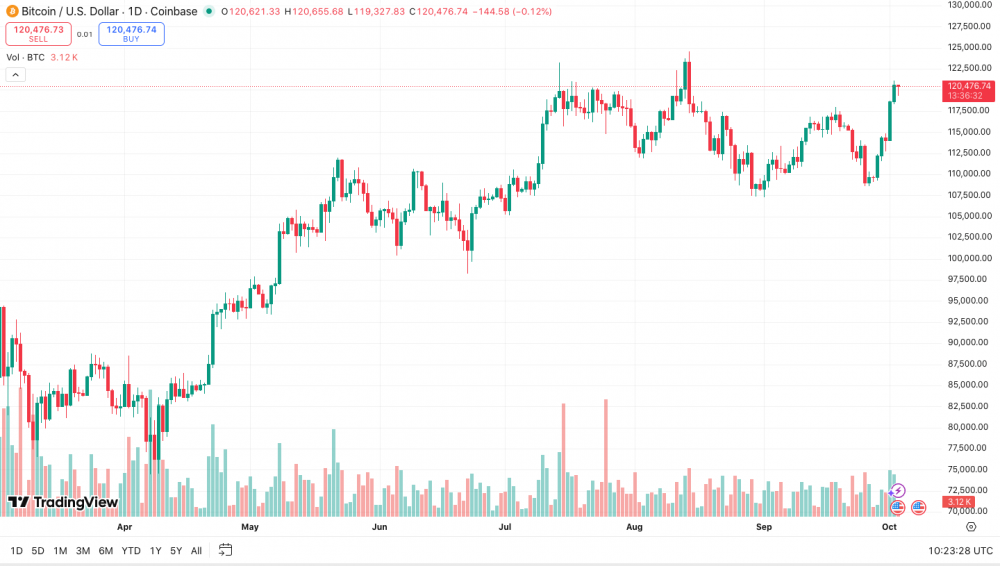

BTC достиг семинедельного максимума на Coinbase. Источник: Tradingview

Слабость рынка труда привела к снижению ставок

Согласно данным, опубликованным на этой неделе Бюро статистики труда, число вакансий в США в августе незначительно увеличилось, в то время как число нанимаемых сотрудников сократилось.

Это усугубило проблемы на рынке труда, что может побудить Федеральную резервную систему вновь снизить процентные ставки в конце этого месяца. Такое решение является позитивным фактором для высокорисковых классов активов, таких как криптовалюты.

«Я думаю, что в первую очередь это связано со слабым отчетом ADP по занятости, который последовал за снижением потребительских настроений ранее на этой неделе, когда дифференциация на рынке труда сократилась», — заявил аналитик IG Market Тони Сикамор.

Он добавил, что это говорит о том, что уровень безработицы, вероятно, вырастет с 4,3% до 4,4% в сентябре, «гарантируя дальнейшее снижение ставок ФРС».

«На фоне ослабления традиционных экономических показателей рост биткоина выше $118 000 демонстрирует его растущую чувствительность к перспективам денежно-кредитной политики и его привлекательность в качестве инструмента хеджирования экономической неопределенности», — отметил Ник Рак, директор LVRG Research.

Прогнозы фьючерсов на CME теперь показывают 99% вероятность снижения ставки на 0,25% на следующем заседании ФРС 29 октября, по сравнению с 96,2% в понедельник.

Альткоины также в тренде

Биткоин лидирует в росте рынка, но Ethereum также прибавил более 5% за день, подняв цену до $4390, самого высокого уровня с 22 сентября.

Другие альткоины, которые сейчас демонстрируют еще более высокий рост, включают Solana (SOL), Dogecoin (DOGE), Cardano (ADA), Chainlink (LINK) и Hyperliquid (HYPE). Эти активы выросли более чем на 6% за день.

Lecturas Relacionadas

TechFlow Intelligence Bureau: Anthropic IPO Odds Exceed 80%, Iran Closes Strait of Hormuz Again, Triggering Oil Price Volatility

**Market Digest** **AI & Tech:** Anthropic is widely expected to announce an IPO before November 2026, raising questions about balancing its trillion-dollar valuation ambitions with its core "AI safety" mission. Brands are increasingly adopting AI-generated virtual influencers for marketing. Cloudflare introduced temporary accounts for AI agents to ease automation workflows. **Infrastructure & Hardware:** Google's IPv6 traffic surpassed 50%, marking a major internet milestone. Goldman Sachs warned that massive projected AI capital expenditure ($5.3T) is approaching credit saturation limits, potentially curbing the "AI arms race." **Space & Robotics:** SpaceX's IPO saw a historic $370M retail buying frenzy in three days. Hyundai Motor Group plans to acquire full ownership of Boston Dynamics. Elon Musk speculated about future "septillion-dollar" investments in antimatter for interstellar travel. **Energy & Geopolitics:** Iran's military announced another closure of the strategic Strait of Hormuz, accusing Israel of violating a ceasefire, causing oil market volatility. However, ship-tracking data indicated some traffic continued. Concurrently, Iran resumed crude loadings at Kharg Island, potentially releasing up to 20 million barrels to the market. **Finance & Macro:** A European CLO (collateralized loan obligation) experienced its first post-2008-crisis-era equity tranche default, raising alarms in credit markets. Nomura warned that new Federal Reserve Chair Wash's perceived hawkish debut speech could signal a significant policy shift. **The Undercurrent:** Seemingly disparate events—the Strait of Hormuz tension, the European CLO default, and warnings on AI spending—point to a tightening of global liquidity and rising marginal costs across energy, credit, and tech investment. Meanwhile, capital continues chasing grand narratives like space exploration and advanced AI, highlighting a divergence where old-world leverage frays as new-world stories grow more ambitious.

marsbitHace 36 min(s)

TechFlow Intelligence Bureau: Anthropic IPO Odds Exceed 80%, Iran Closes Strait of Hormuz Again, Triggering Oil Price Volatility

marsbitHace 36 min(s)

The Hunter Becomes the Hunted: The Most Profitable MEV Bot Gets Hacked

A well-known and highly profitable Ethereum MEV Bot, Jaredfromsubway.eth, suffered a sophisticated on-chain attack this Saturday, losing over $7.5 million. Analysis by Blockaid and others reveals this was not a conventional phishing or smart contract exploit, but a targeted "counter-MEV honeypot attack." The attacker meticulously laid a trap over several weeks, deploying 66 fake token contracts and liquidity pools disguised as major assets like WETH and USDC. These pools created the illusion of arbitrage opportunities. The MEV Bot's automated system detected these signals, executed trades, and in the process, granted approval permissions to attacker-controlled contracts. These approvals were not revoked, creating a persistent vulnerability. The attacker then exploited this in a single transaction, draining the bot's ETH, USDC, and USDT holdings. Jaredfromsubway.eth is notorious as one of Ethereum's most active and profitable MEV Bots, primarily known for executing "sandwich attacks" to profit from transaction slippage. Estimates suggest it has earned tens of millions in MEV revenue. The incident highlights escalating crypto security threats, demonstrating that even top-tier automated "predators" are vulnerable to novel, logic-based attacks designed to exploit their own operational rules. Following the hack, an unverified X account impersonating Jaredfromsubway.eth emerged, falsely offering a bounty for the return of funds, prompting developer warnings for users to stay vigilant.

marsbitHace 1 hora(s)

The Hunter Becomes the Hunted: The Most Profitable MEV Bot Gets Hacked

marsbitHace 1 hora(s)

The Reality of Payments in Latin America Is Not What You Think

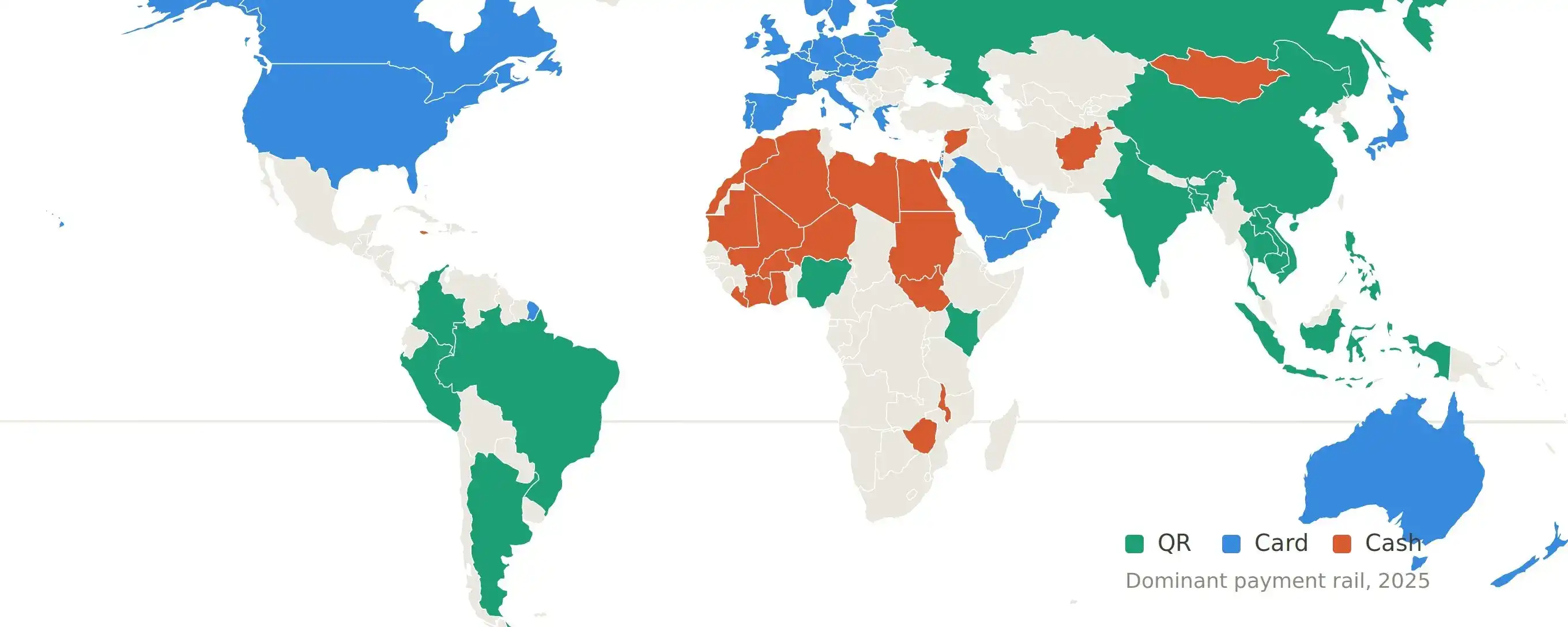
The payment landscape in Latin America is undergoing a fundamental shift, driven by on-the-ground realities that challenge common perceptions. Based on over 500 hours of field research across the region, key insights emerge. Firstly, QR code payments, like Brazil's Pix, are becoming the dominant payment method in most emerging markets, overtaking cards. However, these domestic instant payment systems lack international interoperability, creating a significant gap for cross-border users. Secondly, the narrative around crypto cards is often misunderstood; their primary volume comes from high-net-worth professionals using them for salary conversions (e.g., USDT to local currency via Pix), not retail micro-payments. Competition in payments is shifting from customer acquisition to controlling the settlement layer, leading fintechs to acquire banking licenses for efficiency. Thirdly, treating "Latin America" as a single market is a mistake. Countries like Argentina, Brazil, and Mexico have distinct economic realities, user segments, and regulatory approaches. Brazil alone has at least five distinct user segments with different financial flows. Overlooked markets like Guatemala, Honduras, and El Salvador (the "forgotten five") offer high remittance volumes with lower competitive density. Finally, regulation in Latin America is often ahead of the US, with clearer frameworks for digital assets and a pragmatic approach from regulators focused on safety rather than obstruction. The margin on stablecoin forex is rapidly compressing toward zero, meaning future winners will be those building value-added services on top of the infrastructure, not just the cheapest exchange.

marsbitHace 2 hora(s)

The Reality of Payments in Latin America Is Not What You Think

marsbitHace 2 hora(s)

Trading

Spot
Futuros
活动图片