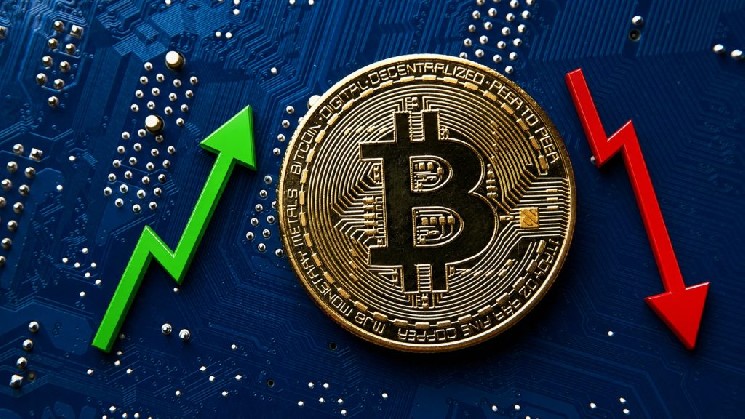
BTC Trading Bots

HTX Holo Analysis

Tailored for BTC, these trading bots provide optimized spot and futures trading plans by precisely analyzing the asset’s market trends, liquidity, and volatility patterns. The bots master the market’s pulse, map out entry points and TP/SL levels, and enforce strict position management.

btc

BTCBitcoin Price

$0.0000290.00%

Live BTC Chart (BTC/USD)

Last Updated:

  • 1H
  • 24H
  • 1W
  • 1M
  • 1Y
  • All
No data

BTC Trading Bots

Sign up and trade to win rewards worth up to 1,500 USDT.Join Now

Top Markets for Grid Trading

Curated hot cryptocurrency markets for grid trading to help you seize arbitrage opportunities in market fluctuations.

BTC Articles

Metaplanet Prepares a Platform for Launching Bonds Backed by Bitcoin as Collateral

Metaplanet, built on a Japanese investment company, is preparing a platform for launching bonds collateralized by Bitcoin. According to sources cited by Benchmark, the new brokerage structure, Metaplanet Securities, will not be used solely as a funding channel for its own Bitcoin purchases. Instead, it aims to become a full-fledged market for tokenized Bitcoin-backed debt instruments, termed "Bitbonds." The platform is designed to allow companies accumulating Bitcoin to issue debt to finance further purchases of the cryptocurrency. Initial bond yields are expected to be 4-6% annually. Metaplanet later plans to migrate these bonds onto a blockchain, use stablecoins for settlements, and develop a secondary market. Final issuance parameters, including the investor pool, loan-to-value ratio, and launch date, remain undisclosed. However, the company has begun surveying investor preferences regarding product design, trading hours, coupon schedules, investor protection, distribution channels, and stablecoin settlements. This initiative follows Metaplanet's acquisition of Siiibo Securities for approximately $13 million, which provided access to a regulated Japanese securities platform. Previous examples of Bitcoin-linked bonds include those issued by Goldman Sachs in October last year and Sberbank in Russia, whose returns were tied to Bitcoin's price performance.

Metaplanet Prepares a Platform for Launching Bonds Backed by Bitcoin as Collateral - cryptonews.ru

Iran Launches 'Sudden Strike' on US Base in Jordan; Oil Prices Jump Nearly 4%, Threatening Bitcoin Rally

Iran launched a "sudden strike" with ballistic missiles targeting a US base near Jordan's Muwaffaq Salti Air Base on July 28. US Central Command reported all missiles were intercepted by Patriot air defense systems, with no casualties. Iran claimed the attack was retaliation for perceived US actions against its interests. This strike broke a brief ceasefire that began after President Trump paused offensive operations against Iran days earlier. The attack triggered immediate financial market reactions. WTI crude oil prices surged nearly 4% to $83.08 per barrel, while Brent crude rose to $87.34. US stock index futures also saw gains as traders priced in renewed Middle East risks. This price jump reversed a significant portion of the oil price decline that followed the initial ceasefire announcement. Bitcoin's price movement mirrored this volatile cycle. It had recovered to around $65,200 as oil prices fell during the ceasefire, but dropped back to the $63,600-$63,800 range following news of the missile strike. While Bitcoin has shown some resilience compared to purely risk-on assets during the conflict, the July 28 attack directly challenged the "truce" narrative that had supported its recent stability. The pattern of price declines following escalations and recoveries during pauses has become familiar since the conflict began in February.

Iran Launches 'Sudden Strike' on US Base in Jordan; Oil Prices Jump Nearly 4%, Threatening Bitcoin Rally - cryptonews.ru

Unexpected Interest Rate Forecast from $67 Billion Asset Management Firm Citadel! Is Bitcoin Under Threat?

As markets await the Federal Reserve's rate decision, views are diverging. While most analysts expect rates to hold steady, Citadel Securities, a $67 billion asset manager, predicts the Fed could surprise with a 25 basis point hike. According to CME's FedWatchTool, the market currently sees a 68.5% chance of no change and a 31.5% chance of an increase. Citadel's Head of Macro Strategy, Frank Flight, told CoinDesk that Fed Chair Kevin Warsh might raise rates unexpectedly at this meeting to reinforce the central bank's commitment to fighting inflation. Flight argues such a move would mark a shift from the Fed's long-standing practice of signaling policy changes in advance, thereby strengthening its perceived independence and credibility on inflation. He contends a hike this week would have a stronger impact than waiting until September. An unexpected increase could boost confidence in the Fed's inflation fight, influence corporate pricing and wage expectations, and potentially avert the need for more aggressive tightening later. Flight noted that such a surprise hike could apply short-term pressure to risk assets, including Bitcoin, if it leads to higher Treasury yields. (Disclaimer: This is not investment advice.)

Unexpected Interest Rate Forecast from $67 Billion Asset Management Firm Citadel! Is Bitcoin Under Threat? - cryptonews.ru

Core Scientific Writes Off $41.9 Million to Accelerate Exit from Bitcoin Mining

Core Scientific reported a $41.9 million payment to terminate a contract with Block and its subsidiary Proto for the supply of Bitcoin mining chips. This move finalizes its exit from plans to grow its hash rate, shifting its business model entirely towards AI colocation. The agreement, announced in July 2024, was for 3nm chips providing roughly 15 EH/s of hash rate. Following the cancellation, Core Scientific stated it will no longer invest in new mining hardware to maintain or expand its cryptocurrency mining capacity. Instead, it will generate cash flow from its existing mining fleet while repurposing its data centers, potentially selling or decommissioning ASIC miners. In Q2 2026, revenue from AI colocation surged to $136.7 million from $10.6 million a year earlier, representing 83% of total revenue. In contrast, its own Bitcoin mining revenue fell 66% to $21.5 million. Quarterly Bitcoin production dropped 53% year-over-year. AI colocation capacity reached 437 MW by mid-July 2026, with CoreWeave accounting for all current hosting revenue and approximately 77% of Core Scientific's total revenue in H1 2026. The company also announced a partnership with AMD for up to 2.5 GW of potential data center capacity, with initial 15-year agreements for about 530 MW estimated to bring in over $14 billion in contract revenue. Total Q2 revenue grew to $164.2 million, while capital expenditures jumped to $797.5 million. As of June 30, 2026, the company reported long-term debt of $4.3 billion and free liquidity of $1.82 billion. The shift aligns with a broader industry trend of major Bitcoin miners accelerating a pivot to AI amid pressure on Bitcoin mining profitability.

Core Scientific Writes Off $41.9 Million to Accelerate Exit from Bitcoin Mining - cryptonews.ru

How Will the Fed's Decision Affect Bitcoin? What is the Probability of Its Rise? Answers from Two Analyst Experts!

The impact of the upcoming US Federal Reserve (Fed) interest rate decision on Bitcoin may be more limited than in past cycles, according to analysts. While markets anticipate rates will remain unchanged, there is a 31.5% chance of a 25 basis point hike. K33 Research notes Bitcoin is trading sideways with near multi-year low volatility, while the Nasdaq shows strong upward momentum. This has caused the correlation between Bitcoin and the tech-heavy index to drop to its lowest levels in years, suggesting their price movements are diverging. Consequently, K33's Vetle Lunde states the Fed's decision may be less decisive for Bitcoin's price than historically, as low volatility and decoupling from Nasdaq trends could dampen its reaction. Similarly, analyst Michaël van de Poppe predicts Bitcoin's recent recovery will continue post-FOMC meeting, arguing the market has already priced in excessive fear and Bitcoin's resilience supports a continued rally.

How Will the Fed's Decision Affect Bitcoin? What is the Probability of Its Rise? Answers from Two Analyst Experts! - cryptonews.ru

Join Grid Trading Community

Join the grid trading community to exchange strategies with millions of traders and receive real-time alerts.

Grid Trading Tutorials for Beginners

3 steps to get started with grid trading: select a trading pair, set parameters, and launch bots with one click.

01

Select Pair

USDe employs a delta-neutral hedging strategy to earn yield, offering stronger value pegging and a low-volatility experience.

02

Set Parameters

USDe supports transparent, professional third-party custody, and undergoes audits to provide robust asset protection.

03

One-Click Creation

No lockups or staking are required. Holding USDe in any account will earn you rewards, accrued daily and distributed weekly.

FAQs

QWhy is Bitcoin a good asset for grid trading?

ABitcoin is one of the most popular assets for grid trading for three reasons. First, it has consistently high volatility — even during relative calm Bitcoin regularly oscillates 3–8% within weekly ranges, providing frequent grid triggers. Second, Bitcoin has the deepest liquidity among all cryptocurrencies, ensuring buy and sell orders fill quickly without slippage. Third, BTC's price history shows recurring oscillation patterns around well-defined support and resistance zones, making it easier to set a meaningful grid range. On HTX, BTC/USDT is consistently among the most-copied and highest-volume grid strategies on the platform.

QWhat price range and grid count works best for BTC/USDT grid trading?

AFor BTC/USDT grid trading, a practical starting framework uses the 30 to 60-day recent high and low as your price boundaries. This covers a realistic oscillation band without being so wide that each individual grid level rarely triggers. For grid count, 20–50 levels works well for most capital sizes; each grid step should represent at least 0.5–1% of the price to cover trading fees and generate meaningful net profit per trade. HTX's AI parameter tool analyses current BTC volatility and automatically suggests an optimised range and grid count based on your investment amount — recommended for first-time BTC grid deployment.

QHow does Bitcoin's halving cycle affect grid trading strategies?

ABitcoin's approximately four-year halving cycle creates distinct market phases that affect optimal grid configuration. In the 12–18 months following a halving, Bitcoin historically enters a bull phase with strong upward trends — standard neutral grids may sell Bitcoin too early and miss the full upside. A Long Grid biased toward accumulating on dips is more appropriate during these phases. During the accumulation phase before a halving or in bear conditions, neutral or slightly short-biased grids perform better. The 2024 halving occurred in April 2024, placing us in a mid-to-late bull phase as of mid-2026 — grid configurations should be biased accordingly toward long-oriented parameters with wider upside range.

QWhat is the difference between BTC spot grid and BTC futures grid trading?

ABTC spot grid and BTC futures grid share the same buy-low-sell-high logic but differ in four key dimensions. Asset ownership: spot grid buys give you actual BTC; futures grid holds perpetual contract positions. Liquidation risk: spot has none — even a 50% drop just means holding BTC at a higher cost; futures with leverage can be liquidated if margin falls below the maintenance level. Funding rates: futures incur or earn funding rate payments every eight hours based on premium or discount to spot. Leverage: futures can amplify returns 2–10× but losses proportionally. For BTC grid trading beginners, spot is recommended as the lower-risk starting point; futures suits traders comfortable with leverage and margin management.

QWhat technical indicators help identify good entry timing for a BTC grid?

ASeveral technical indicators signal favourable conditions for deploying a BTC grid. Bollinger Bands: when BTC is trading inside a tightening Bollinger Band squeeze, compressed volatility often precedes a range-bound phase ideal for grid entry. ATR (Average True Range): low ATR values suggest price moves are small and contained, suitable for grids; high ATR with directional momentum suggests waiting. RSI between 40 and 60 indicates BTC is in a neutral zone without strong directional bias — the ideal deployment window. High-volume price zones from Volume Profile analysis provide natural grid boundaries where the market is likely to oscillate. HTX's AI market summary integrates these signals to provide daily grid suitability assessments for BTC.

QCan I run a BTC grid on pairs other than BTC/USDT?

AYes. On HTX you can run grid strategies on multiple BTC trading pairs. BTC/USDC behaves similarly to BTC/USDT but uses Circle's USDC as the quote currency. BTC perpetual futures are available in both USDT-margined and BTC-margined variants. In coin-margined (BTC-margined) contracts, profits and losses are denominated in BTC rather than USDT — this benefits you in bull markets as your BTC balance grows, but amplifies losses in bear markets since the collateral itself is declining in value. For most grid traders, BTC/USDT remains the most straightforward and liquid choice.

QWhat realistic annual returns can I expect from a BTC grid strategy?

ARealistic annual returns from BTC grid trading depend heavily on market conditions during the period. In high-volatility, range-bound markets, well-configured spot grids have historically demonstrated 25–70% after-fee annual returns on major exchanges. In low-volatility or strongly trending markets, returns may fall to 5–20% or turn negative if price moves strongly outside the grid. Futures grids with 3–5× leverage can amplify these returns proportionally but with higher risk. These ranges reflect historical outcomes under specific conditions and are not guaranteed. Use HTX's backtest tool to see what a specific parameter set would have earned over any chosen historical period before deploying real capital.

QCan BTC grid trading work during a bear market?

AGrid trading can still work during a BTC bear market but requires a different strategic approach. The key shift is strategy direction: instead of a neutral grid centred on current price, a Long Grid configured toward the lower end of a falling price range is more appropriate. This approach accumulates BTC at progressively lower prices — similar to DCA — while sell orders placed at higher grid levels recapture some profit on any rebounds. The critical risk is that the accumulation continues if the decline goes deeper than your grid's lower boundary, and with no stop-loss, exposure grows. Best practices for bear market BTC grids: use only spot (no leverage), set wider grid ranges with fewer levels, maintain an explicit stop-loss, and keep 20–30% of intended capital as reserve rather than deploying it all upfront.

QCan on-chain Bitcoin metrics help me set better grid parameters?

AYes. Several on-chain metrics provide useful context for BTC grid parameter setting. MVRV Ratio (Market Value to Realised Value): values above 3.5 historically indicate overvaluation — the grid's upper boundary should be set more conservatively; values below 1 suggest undervaluation — wider downside room is appropriate. NVT Ratio (Network Value to Transactions): acts like a P/E ratio for BTC; high NVT with declining on-chain activity signals overvaluation risk relevant to your upper grid limit. Puell Multiple: measures daily issuance value relative to the 365-day average; high values indicate elevated miner selling pressure, relevant to your lower grid boundary. Free data for these metrics is available on Glassnode's basic tier, CryptoQuant, and LookIntoBitcoin.com. While no metric precisely predicts price, they provide a probabilistic context for setting boundaries aligned with broader market valuation.

QHow do I choose a good BTC grid strategy to copy on HTX?

AWhen browsing BTC grid strategies on HTX's leaderboard to copy, evaluate five key metrics. Runtime: prioritise strategies running for at least 7–14 days to ensure the track record reflects real market conditions rather than an initial lucky run. Drawdown: the 7-day max drawdown should be below 15% for conservative investors and below 25% for moderate risk tolerance. ROI consistency: look for strategies with steady realised PnL growth rather than a single large spike — consistent daily growth indicates a working grid while a spike may reflect one unusual price move. Grid parameters: check that the current BTC price still sits within the strategy's active range. If current price is at or near the range boundary, the strategy may be about to stop trading. Minimum investment: ensure the copy minimum matches your available capital.