The live price of USD.AI (CHIP) is $0.02 USD and its current market capitalization is $-- USD.
Get real-time CHIP/USD updates on HTX. Stay informed with the latest data and market trends to make smart trading decisions. HTX, your trusted source for accurate cryptocurrency price information.
USD.AI Key Stats
24h Volume (USD)
$--
Price Change Today
+4.17%
Circulating Supply (CHIP)
2.00B
Sign up and trade to win rewards worth up to 1,500 USDT.Join Now
CHIP Price Performance
Track USD.AI price movements with chart views spanning 1 day, 30 days, 60 days, 90 days, 1 year, and the period since it was listed on HTX.View more data for the USD.AI prices
Time
Change
Change%
Highest Price
Lowest Price
No data
CHIP Market Information
Get the latest USD.AI price details on HTX: 24-hour high and low, all-time high (ATH), and daily price change percentage.
24h Low
$0
24h High
$0
All-Time High
$0
Market Cap
$0.00
24h Volume (USD)
$--
Circulating Supply
--
What is CHIP?
USD.AI is a permissionless lending protocol built to finance AI infrastructure. The protocol enables GPU operators to tokenize their hardware as collateral and access financing instantaneously.
It's super easy to buy CHIP on HTX. Simply click here to view a complete guide to buying USD.AI with ease.
Real-Time CHIP Markets
View real-time USD.AI prices on HTX's spot markets. Switch between spot and futures markets to instantly compare live prices and 24-hour price changes.
Based on the historical performance of USD.AI, our prediction tool estimates that the price of USD.AI (CHIP) could reach -- by --.
Predicted CHIP Price in --
Our most recent forecast indicates the price of USD.AI (CHIP) will increase to -- by --, with a price change of --% and a cumulative ROI of approximately --%.
Buy your first CHIP on HTXSign Up
CHIP FAQs
QWhat is the USD.AI (CHIP) price today?
AThe current price of USD.AI (CHIP) is $0.02 USD.
QWhat is the USD.AI (CHIP) market cap?
AThe current market capitalization of USD.AI (CHIP) is $0.00 USD, calculated by multiplying its circulating supply by its current price.
QWhat is the USD.AI (CHIP) circulating supply?
AThe current circulating supply of USD.AI (CHIP) is -- CHIP.
QWhat is the USD.AI (CHIP) all-time high?
AAs of 2026-08-06, the all-time high of USD.AI (CHIP) is $0 USD.
QWhat is the USD.AI (CHIP) 24h trading volume?
AThe 24-hour trading volume of USD.AI (CHIP) is -- USD on HTX.
QCan I buy USD.AI (CHIP) on HTX?
AYes, HTX offers industry-leading trading fees and deep liquidity, ensuring a smooth and secure USD.AI (CHIP) purchase experience.
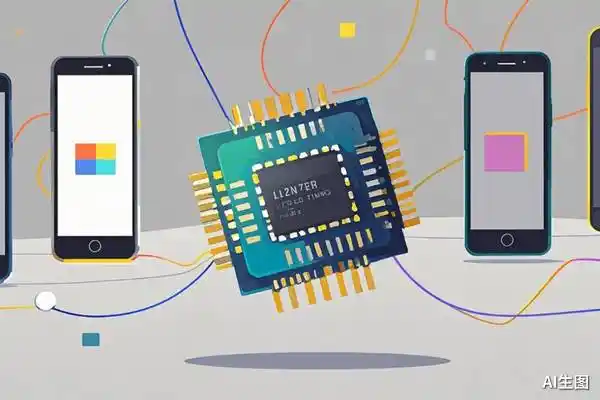
Qualcomm has officially announced a new round of price increases for its entire chip portfolio, effective September 1. The hikes, reaching up to 18% for the flagship Snapdragon 8 Elite Gen 6 Pro, follow similar moves by MediaTek, intensifying cost pressures on the already strained smartphone industry.
CEO Cristiano Amon confirmed the plan, citing the need to offset rising industry-wide costs and restore declining profit margins. Qualcomm's Q3 FY2026 results showed a 25% drop in net profit, with mobile revenue plunging 20% year-over-year, hitting its lowest level since 2021.
The surge in AI computing demand has led memory manufacturers to prioritize HBM production, creating a shortage in general-purpose DRAM and NAND Flash chips. Their prices soared by 93%-98% and 55%-60% respectively in Q1 2026, causing the memory cost share in smartphones to jump from 10%-15% to over 30%. Coupled with the soaring cost of advanced nodes like TSMC's 2nm and packaging, overall chip costs have reached historic highs.
These upstream pressures are forcing downstream smartphone brands like Xiaomi, OPPO, and vivo to cut orders for mid-to-low-end models by up to 20% and use cost-saving measures like older chipsets. Reportedly, the Snapdragon 8E5 will be repurposed as a "long-lasting" chip for sub-brand phones in H2 2026.
Amid this cost crisis, the Android market remains sluggish. Q2 2026 smartphone shipments in China fell 4.3% year-over-year, marking five consecutive quarters of decline. Major Android brands saw market share drop, while Huawei and Apple, with their in-house chip advantages, gained share.
Qualcomm is diversifying into automotive and IoT sectors to reduce reliance on smartphones, but these new segments cannot yet fill the mobile revenue gap. Industry observers warn that the full impact of component cost hikes will hit in the second half of 2026, likely leading to higher-than-expected price increases for Android flagships and a further contraction in the Chinese smartphone market.
The storage chip sector experienced a dramatic overnight rebound in US markets, with major stocks like SK Hynix and Micron surging over 17%. This sharp reversal is attributed to multiple factors: potential short-selling bans and market stabilization measures from South Korea, significant leverage unwinding (with leveraged ETF assets down ~70% from peaks), cooler-than-expected US inflation data easing rate hike fears, and a stellar Microsoft earnings report showing strong cloud/AI demand growth. Microsoft's results, highlighting Azure revenue crossing $100 billion, helped counter the "AI bubble burst" narrative that had pressured the sector.
However, the article cautions against declaring a sustained bull market. Key risks remain, including potential further interest rate hikes by the Bank of Japan, which could pressure global carry trades, and unanswered questions about whether high industry profits can be maintained amid the supply cycle and new competition. Investors are advised to monitor whether gains hold, watch for updates on HBM/DRAM/NAND pricing and orders, and await key upcoming events like NVIDIA's earnings. The conclusion emphasizes disciplined investing—avoiding panic selling or FOMO buying—and using strategies like hedging to manage risk in this volatile environment.
U.S. stocks surged to record highs driven by strong earnings and easing Middle East tensions. The Dow Jones and S&P 500 both hit closing records, with the Nasdaq jumping 2.59%. The Philadelphia Semiconductor Index soared 6.55%, marking four straight days of gains, fueled by a broad AI rally spanning chips, software, and infrastructure. SanDisk and Intel surged over 10%, while Micron's market cap returned to the $1 trillion level.
Geopolitical optimism weighed on oil, with WTI crude falling over 5%. Reports indicated the U.S., Iran, and Oman are nearing a temporary deal to reopen the Strait of Hormuz, alleviating supply disruption fears and lowering September Fed rate hike probabilities.
Key stock movers included Palantir, up 29.45% on explosive revenue growth; Caterpillar, hitting a record high on raised guidance linked to data center demand; and AMD, rising 7% despite a post-earnings dip. Nvidia gained 2.56% after announcing new open-source models and securing an exclusive AI partnership with SpaceX. However, Oracle faces heightened credit risk due to heavy AI-related borrowing.
Markets now focus on upcoming earnings from Uber and Eli Lilly, and a major SpaceX share lockup expiry on August 6th.
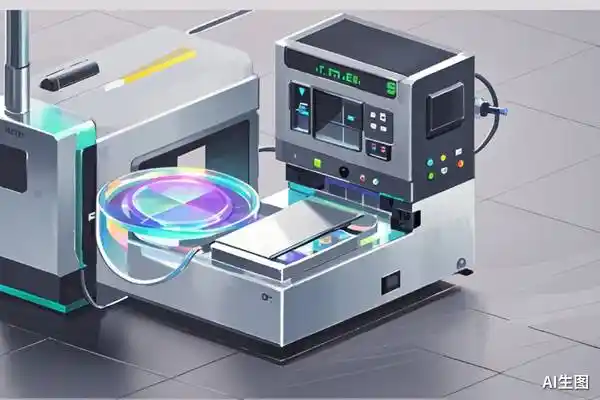
The competition in chip manufacturing equipment is no longer solely about who has the most advanced technology. While performance, yield, and cost remain key, U.S. export controls are adding a critical new dimension: long-term supply chain reliability.
Major chipmakers like Samsung and SK Hynix, despite having mature supply chains with leading American and European vendors, are reportedly evaluating etching equipment from China's AMEC for their Chinese factories. This move is not primarily about immediate replacement or AMEC's current capabilities. Instead, it's a risk mitigation strategy. Companies are concerned that future U.S. policies could disrupt their access to spare parts, software updates, and maintenance for existing equipment over its decade-long lifespan.
For chipmakers investing billions in fabs with long planning cycles, this policy-induced uncertainty is a significant new risk. The U.S., through its controls, is inadvertently eroding the very reliability and certainty that were foundational strengths of its equipment suppliers.
This creates a pivotal shift for Chinese semiconductor equipment. Previously seen largely as a "domestic replacement" option when foreign gear was unavailable, they are now being assessed as potential "contingency suppliers" by global players—even before a supply disruption occurs. This provides a crucial entry point for validation in real production lines, which is essential for iterative improvement.
Chinese equipment, particularly in areas like etching, has progressed from prototypes to participating in mass production within China, gaining valuable experience. However, this does not signify full global competitiveness. Gaps remain in advanced lithography, metrology, and other key tools. The current evaluations are largely confined to foreign firms' China-based fabs, not their global procurement networks.
The core change is in the decision-making framework. Efficiency-driven globalization favored single, optimal suppliers. An era of heightened geopolitical risk is forcing companies to value "replaceability." While technical prowess remains paramount, supply chain certainty is now being factored into a device's competitive equation.
Ultimately, U.S. policies have not made Chinese equipment more advanced, but they have given global customers a compelling reason to start testing it. The competition has expanded: it's no longer just about who is more advanced, but also about who can be relied upon to stay.
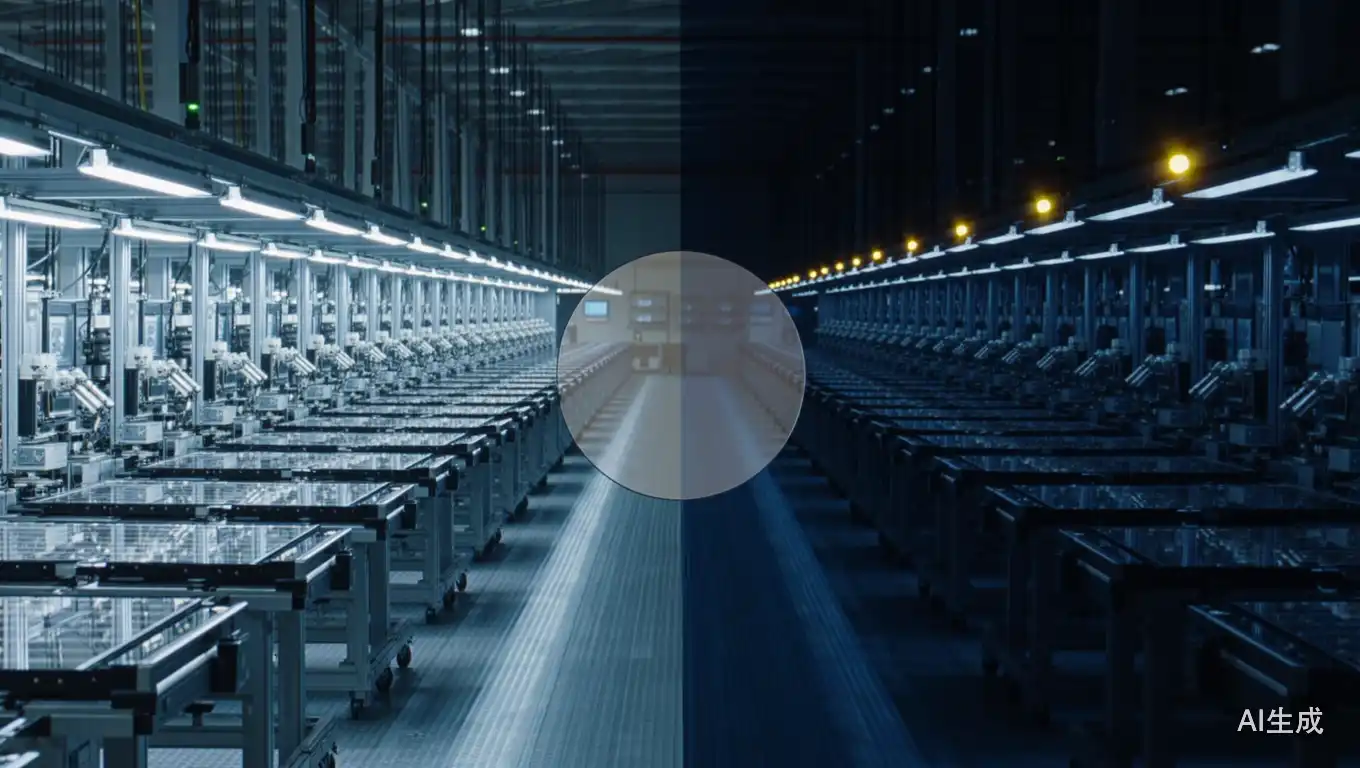
China's DRAM industry saw a pivotal moment with ChangXin's (CXMT) successful IPO. However, the fate of its 2016 counterpart, Fujian Jinhua Integrated Circuit, offers a stark contrast. Both were founded the same year with similar missions, massive investment, and 12-inch wafer fab goals to break into the DRAM market dominated by Samsung, SK Hynix, and Micron.
Fujian Jinhua initially progressed faster by partnering with Taiwan's United Microelectronics Corporation (UMC) for 32nm DRAM technology. This strategy, however, led to a protracted legal battle. In 2017, Micron sued UMC and Jinhua for trade secret theft. The situation escalated in October 2018 when the U.S. Commerce Department added Fujian Jinhua to its Entity List, citing its imminent mass production as a threat. This resulted in an immediate halt of equipment, software, and technical support from American suppliers, followed by UMC suspending cooperation. Although Jinhua was eventually cleared of criminal charges in late 2023 after a nearly six-year legal saga, it missed the critical industry growth window.
In contrast, ChangXin took a different path from the start, focusing on building its own R&D system and securing intellectual property, notably through a license for former Qimonda patents. While also facing U.S. scrutiny and initial heavy losses, ChangXin benefited from a more mature domestic supply chain when it reached mass production. It achieved profitability in 2025 and represents the rise of China's DRAM industry.
Jinhua's story is a crucial lesson. It was the first Chinese DRAM company to confront the complex realities of international IP disputes, export controls, and supply chain vulnerabilities. Today, it has resumed operations with a 40,000 wafers-per-month capacity, aiming for 60,000. While it missed its initial opportunity, its experience informed the strategic evolution of later Chinese semiconductor firms.
marsbit1天前
Threads
Welcome to the HTX Community. Here, you can stay informed about the latest platform developments and gain access to professional market insights. Users' opinions on the price of USD.AI (CHIP) are presented below.
Related Questions
Welcome to the Crypto FAQ. Users' questions and answers on USD.AI (CHIP) are presented below.